Get Involved with Bird Counting
Are you a birder (or interested in birding) who wants to contribute to science? Learn about how to get involved in the Great Backyard Bird Count!
By Denise Thornton
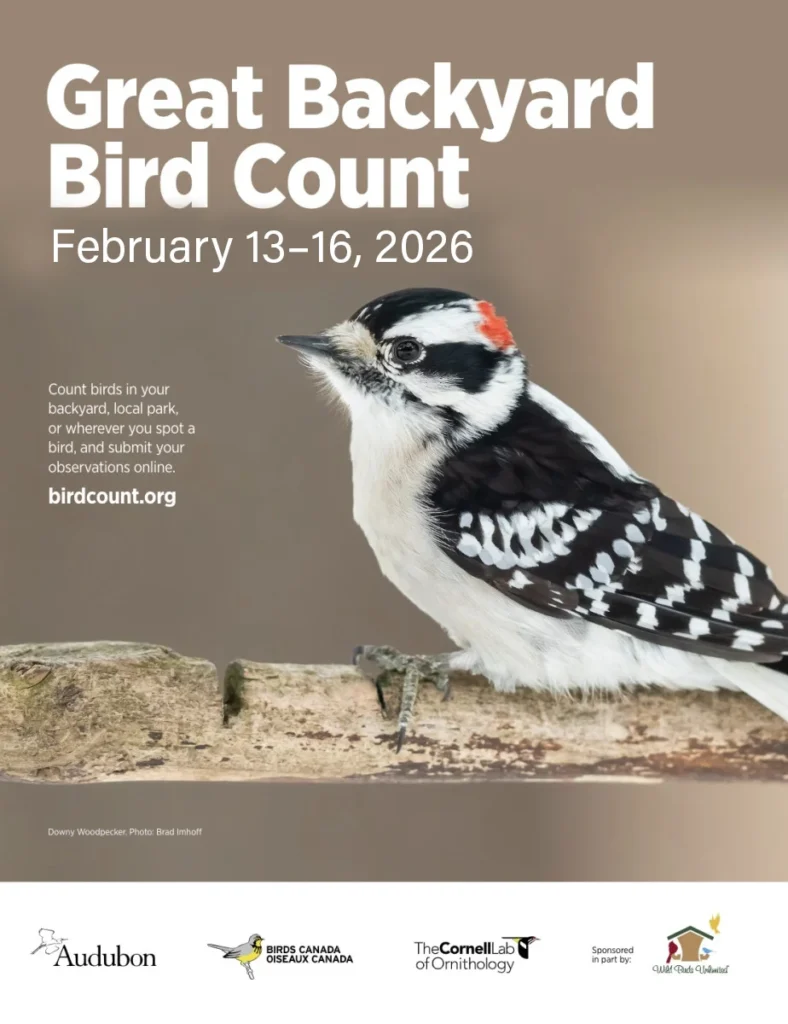
For many of us, a big part of the pleasure of winter is watching the birds that flock to our feeders. From February 13-16, 2026, you can take your joy up a notch by participating in this year’s Great Backyard Bird Count (GBBC). “It’s inspiring to be one of the people united around the globe in their mutual love of bird watching and bird recording,” says Becca Rodomsky-Bish, Project Leader of GBBC for the Cornell Lab of Ornithology.
The GBBC Is Growing
Now in its 29th year, GBBC began as an experiment that Cornell Lab created in partnership with the Audubon Society. They wondered what would happen if they invited people to start sharing bird sitings with them. After a few years, Birds Canada joined in.
“eBird began their tool development in the early 2000s, and by 2013 it was so commonly used that GBBC started to enter their data into the eBird tool so that the count could contribute to a larger conservation program,” says Rodomsky-Bish. “When I took on the project five years ago, we decided Merlin Bird ID, which was gaining traction, could be another great tool, especially for beginning birders who wanted to join the GBBC.” (Learn which tool is best for you below.)
“The whole world is our backyard now,” she continues. The GBBC has grown into a global project. “Last year we had 800,000 people around the world participating, and we are hoping this year that we will reach one million.”
Who Uses the GBBC Data?
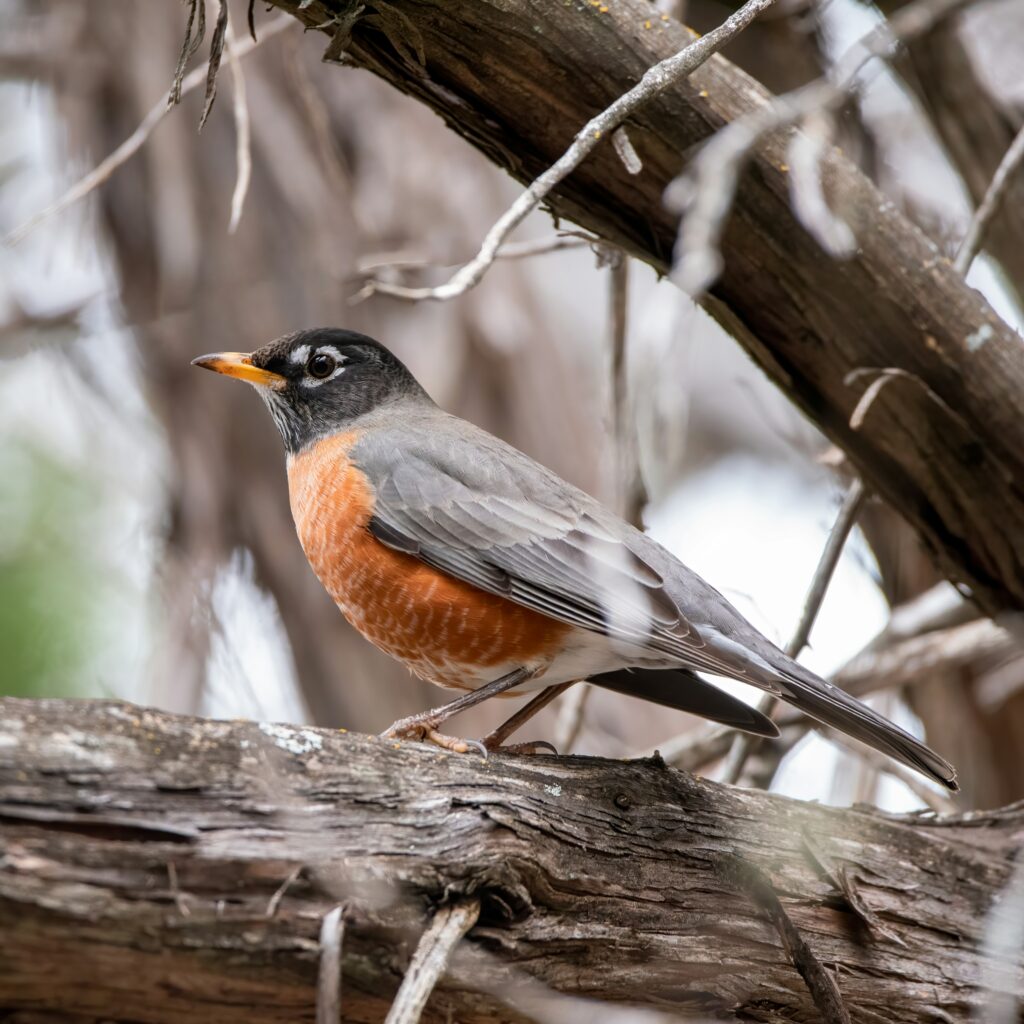
The American Robin
“The GBBC contributes to eBird’s data set, which is one of the largest bird data sets in the world,” Rodomsky-Bish says. “As you can imagine, there is a lot of research that uses this data. In 2024, data from the count contributed to 248 academic research publications on topics including: “Bird species tolerance to human pressures and associations with population change,” “Geography, taxonomy, extinction risk and exposure of fully migratory birds to droughts and cyclones,” and “A deep dive into the waterbird community of an urban oasis: implications for park management.”
“Scientists often combine our bird data with weather data to learn how birds are responding to changes in weather patterns. Our bird data can also be overlaid with climate data to understand how climate is impacting birds and land,” says Rodomsky-Bish. “This can help us understand bigger questions relating to the health of ecosystems.”
How to Prepare for the GBBC
“You can prepare to participate in the GBBC by spending a little time learning to use the Merlin or eBird apps,” says Rodomsky-Bish. “Download either the Merlin or eBird apps — or both of them — to your phone ahead of time at these sites on our website. Experiment and play with them. Some people ask, ‘Why do I have to give you my email and create an account?’ That’s because this data is being used in research, and researchers need to reference the actual source to verify that this data is accurate.”
Should You Use Merlin or eBird?
Cornell has a web page that can help people decide whether to use the Merlin Bird ID app or the eBird Mobile app.
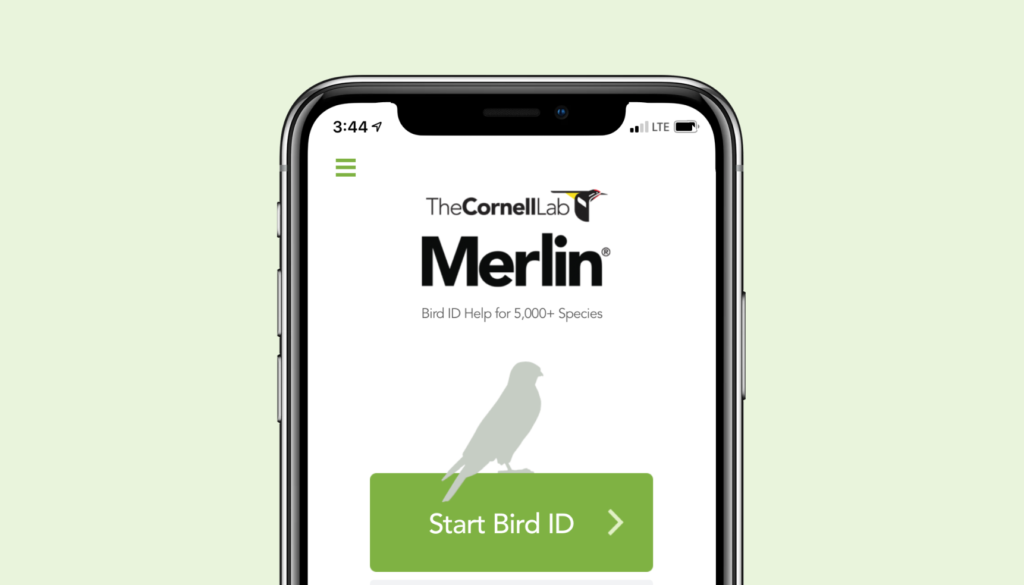
“Merlin is a bird ID tool,” says Rodomsky-Bish. “You can record a bird’s call or go through a work flow to tell us your location, the date, the bird’s color, what it’s doing, and how big it is, to get options of what type of bird you might be seeing at your location on that day. For someone who has never identified a bird before, that can be really helpful. But with Merlin, you can’t actually tell us how many of those birds you see.” Merlin will also provide several photos of the bird as well as range maps so you don’t have to own a separate field guide.
“On the other hand,” she says, “If you already like to monitor and count birds, and if you know your birds, eBird is better for reporting actual numbers of birds. As we continue to get more positive IDs on eBird, we use them to update the Merlin app. For example, many of the northeast states had declines in bald eagle populations in the 1960s – 1970s, and so for a long time Merlin didn’t include bald eagle as one of the likely bird sitings in that area. Bald eagles have since rebounded — specifically in the northern states — and bald eagles are now included as part of Merlin’s ID for that area. The tools work in tandem with each other.”
Some people like to have both apps in their phone. That way, if you see a bird that you don’t know at your feeder or on a hike, you can snap a photo and use Merlin’s photo ID to identify it. You can also ID unfamiliar bird calls with Merlin.
eBird becomes useful as you start to build lists of the birds you have seen, and want to look at historical data on those birds. It allows you to create a life list of the birds you have seen, as well as a list of the birds you saw in a local park, or on vacation. It also has an explorer tab to research specifically where particular species can be found. eBird can be used to help plan your trip, if you want to go to hot spots for particular birds.
How to Participate in the GBBC
Step 1: Decide where you will watch birds.
Step 2: Watch birds for 15 minutes or more, at least once over the four days of the GBBC, February 13–16, 2026.
Step 3: Identify all the birds you see or hear within your planned time/location and use Merlin Bird ID or eBird Mobile to share your bird sightings.
Don’t Miss the Introductory Webinar
Cornell Lab is offering a beginner-friendly webinar on participating in the GBBC at the following two times:
- Thursday, February 5, at 3 p.m. ET / 12 p.m. PT
- Wednesday, February 11, at 7 p.m. ET / 4 p.m. PT
The webinar is a one-hour live event sharing tips, tricks, and ideas to help you prepare for the GBBC. Special guest Julia Zarankin, is author of the quirky memoir, Field Notes from an Unintentional Birder. Zarankin’s life was changed when she saw her first red-winged blackbird at the age of 35. She will be sharing her love of backyard birds with viewers.
You can register here for the webinar and then simply share your birds on eBird or Merlin over the four days to be part of this year’s Great Backyard Bird Count.