
Taking Action in Your Woods to Adjust for Changing Climate
How do we make sure we are taking care of our woods in the face of climatic changes in our world? Learn how to take action in this article!
By Denise Thornton
Taking the effects of a changing climate into account when making land management choices may seem like a daunting challenge, but there is a wealth of helpful resources available. Brad Hutnik, Forest Ecologist and Silviculturist with the Wisconsin Department of Natural Resources WDNR), says, “Foresters are built for long-term thinking and taking lots of factors into account when making management plans Climate impacts are just one more thing to consider when making sound decisions.”
Today, taking the long view and incorporating landscape considerations is more essential than ever, and differs according to ecotype. The impact of carrying out management practices can reach well beyond our fence lines. “Natural areas are our life support system,” says Amy Staffen, Conservation Biologist with the WDNR Natural Heritage Conservation Program. “Along with forests that filter the air and provide important shade and cooling effects, we have grasslands that sequester carbon in their deep root systems, and wetlands that serve as natural sponges to help slow the flow of the gully-washers that are becoming more and more frequent. Ecosystems like these, especially when restored, help protect us from damaging effects of climate change.”
UNDERSTAND YOUR LAND
Staffen notes there are several steps you can take. To make sure you have a good handle on your land. You need to first explore it and define it. “What are your natural communities,” says Staffen. “Do you have a dry prairie, a sedge meadow, a forest stand, an oak woodland, or a mesic forest?” If you’re managing for silviculture (silviculture is the art and science of controlling growth, composition, health, and quality of forests and woodlands) what species do you have, and how are they distributed across the landscape?”
With this increased understanding, we become better prepared to assess current and potential problem areas. “We have found that very often most of the time vulnerabilities can be addressed through sound management,” says Hutnik. “Most of the time, customary best practices are what is needed. What might change is why we decide to use certain practices.”
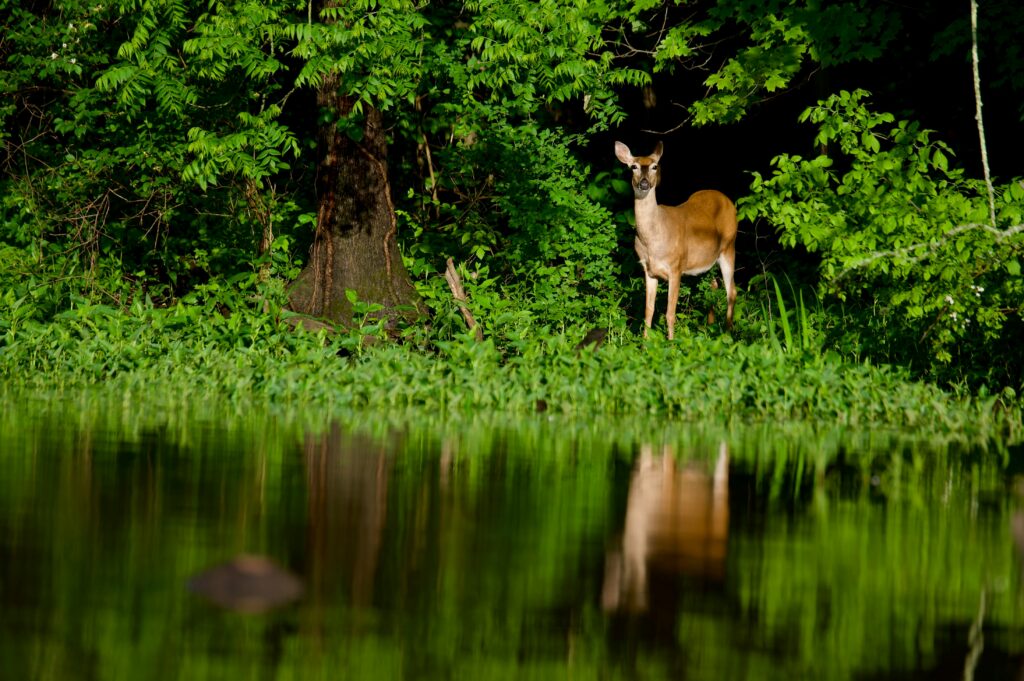
Changes in climate can affect the deer population. “It’s probably not so much an issue in southern Wisconsin, but in northern Wisconsin, hard winters can reduce deer numbers, and milder winters can result in an increase. It’s not that we won’t have very hard winters, but we expect them to occur less frequently in the future. If you have a smaller deer population going into a hard winter you might have enough food to get that population through, but if you have a larger population going into a hard winter, it could lead to greater mortality — both at local and landscape scales. This could result in a deer population that experiences dramatic swings.
Also, the plants more sensitive to deer browse will be influenced by these swings.” To learn more about the changes thus far in Wisconsin winters, go to the Winter Severity Index, a combination of snow cover and temperature the DNR uses to anticipate how the deer population may be impacted by recent winter conditions.
RISK MANAGEMENT
“We don’t have a crystal ball, but we have many resources to help people understand what is happening now, and what may happen in the future,” says Staffen. “We think of this as a form of risk management. In the short term, we are seeing effects of climate change already, and we can come up with plans that make sense to us now. We can also look at climate change projections for likely future conditions and come up with ways to minimize risks in the event that those projections come to pass.”
A great resource is the Wisconsin Initiative on Climate Change Impacts (WICCI) coordinated by the Nelson Institute for Environmental Studies and the Wisconsin Department of Natural Resources. “Often times the best management is a collaboration between researchers and managers, and WICCI is the home base for active collaboration here in Wisconsin when thinking about climate change,” states Hutnik. “The goal of WICCI is to evaluate the projected impacts in a range of settings. We have working groups that cover many different facets of Wisconsin, including the plants and natural communities, forestry, agriculture, tourism and outdoor recreation, water resources, and wildlife. They are all exploring the potential impacts specifically on Wisconsin, and how can we develop solutions.”
“At the WICCI website, you will also find a link to the Great Lakes Indian Fish and Wildlife Commission working group. While they are not a WICCI working group, you can see a version of climate change vulnerability written from the tribal perspective, which is very interesting and important,” says Staffen.
DIVERSITY OF PLANTINGS
One way to prepare for potential changes is to diversify your plantings. “When people are doing restoration plantings (e.g., prairie, woodland, or wetland), we are suggesting that you kick your seed mixes up a notch,” says Staffen. “Intentionally design a native seed mix to have the highest number of species possible. Make sure you have a nice selection of different life histories: annual, biennials, perennials; different root depths, and different plant families. Make sure you have things that grow and flower at different times of year. The more you diversify your plantings — the more you are hedging your bets that something of quality will always be growing.”
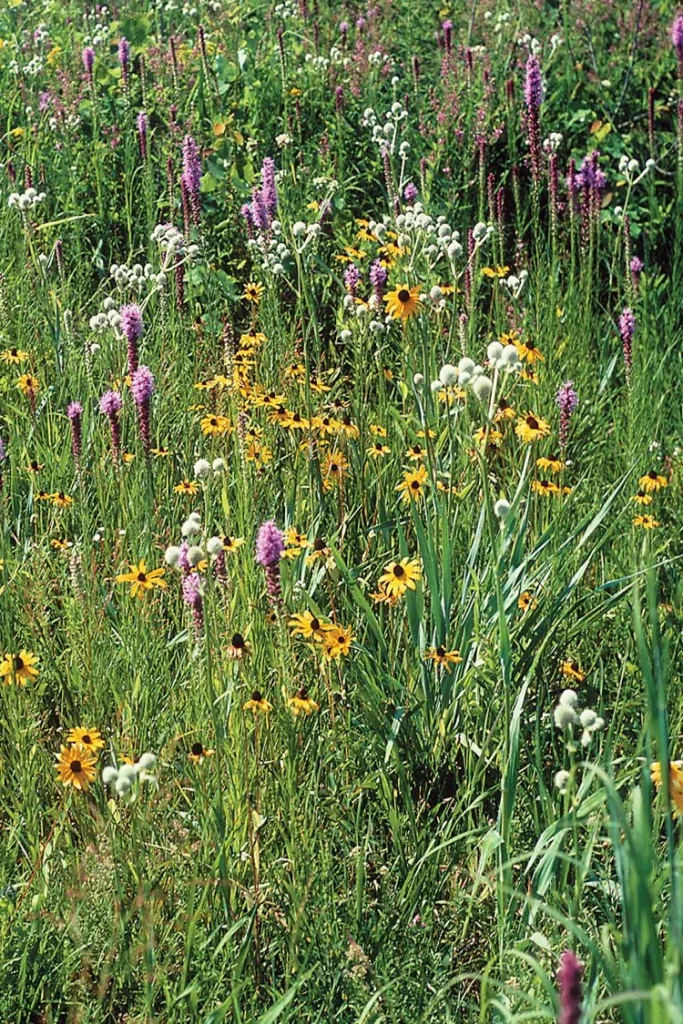
“It’s a lot like diversifying your investment portfolio,” Staffen says. “You can provide seeds that accommodate a lot of different conditions. It’s been observed that seeds can persist in the soil for decades, so if you build a robust seed bank, different species can wax and wane over time in response to changing conditions. You can also diversify your prairie planting at the genetic level by collecting and purchasing seed from several sources within 50 miles of your planting site. It might be that one subpopulation will handle drought better than another. It’s good to diversify on every level possible,” Staffen says.
Hutnik agrees. “We are talking about the concept of not putting all your eggs in one basket. Having more diversity in your forest will give you options. That could mean that the impact of an unforeseen event is not as bad. This might possibly include assisted migration — the movement of trees from one territory to another in response to climate change — but most steps you can take to prepare for a changing climate are things that make your woods more resilient right now. While assisted migration is interesting, it may or may not be needed. Thinking about wha stressors and vulnerabilities your woods is facing may well tell you if the species you already have are sufficient.”
RESILIENCE
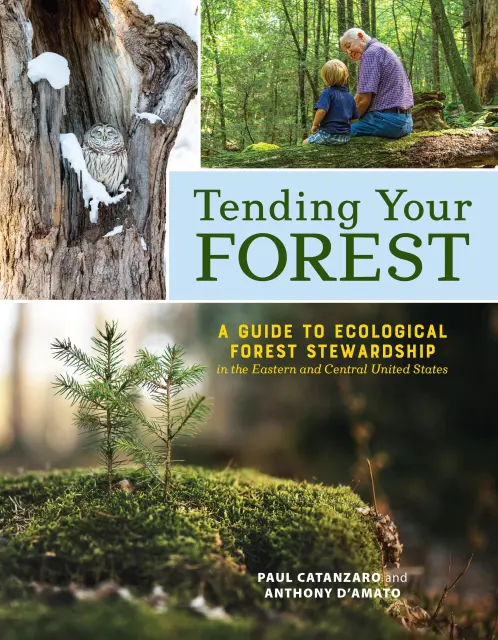
“We are going to be hearing more in the future about ecological forestry and ecological silviculture (silviculture is the art and science of controlling growth, composition, health, and quality of forests and woodlands) where we are basing our management on natural disturbance patterns and processes,” says Hutnik. He suggests a good book to read on this topic is Tending Your Forest: A Guide to Ecological Forest Stewardship by Paul Catanzaro and Anthony D’Amato.
Here in Wisconsin, there is a 20-year plus project underway in Grant County. The Adaptive Silviculture for Climate Change Project is part of a nation-wide set of studies to test different silvicultural approaches to climate change that will serve as useful examples across the U.S, and Canada.
MORE OPTIONS
Hutnik co-hosts a podcast with Greg Edge called SilviCast “We talk to professionals in the field and some episodes are about elements of climate change and forest management,” he says. “We aim to make the podcasts fun to listen to as well as informative. We’re like the Click and Clack of forestry.” Two episodes to consider are Climate Castaways and Climate Change Help Desk.
Another good resource is a series of webinars called Adaptation in Action Forest Management Strategies for a Changing Climate offered by UW-
Stevens Points Wisconsin Forestry Center this spring. This webinar series will explore practical, real-world approaches to climate adaptation. Each session highlights a key adaptation strategy and connects current science with boots-on-the-ground forest management. The March 18 webinar is on Reducing the Risk of Long Term Disturbances, and the April 15 webinar will be on Maintaining and Enhancing Species and Structural Diversity.
“Another valuable resource,” says Staffen, “is the Adaptation Workbook which is put together by our wonderful colleagues at the Northern Institute of Applied Climate Science (NIACS) a partnership led by the USDA Forest Service and comprised of federal, forest sector, conservation, higher education, and tribal organizations. It’s an easy website to navigate. Adaptation Workbook will take you through a step-by-step process with many examples to help you define your site, think about management goals and their climate vulnerability, looking at your goals through a climate change lens. There are menus of adaptation actions for a variety of habitat types.” Staffen helped write the menu for open wetlands. Learn more at Climate Change Response Framework.
For managing woodlands, the USDA and NIACS have produced climate change field guides for both southern Wisconsin forests and northern Wisconsin forests. “These forestry guides are an important resource,” says Hutnik. He suggests these as some helpful sources we should be looking at for a good overview — they all work well together.
“The take-home message,” says Hutnik, “is if you are already thinking about stressors and vulnerabilities in your forest management plan, climate change is just one more consideration. When you start to look at potential impacts, good information makes it less scary and more concrete.”
With good advice from experts like Staffen and Hutnik, worries about the potentially troubling impacts of a changing climate on our natural areas can be managed in ways that are both actionable and hold the promise of long term sustainability.