
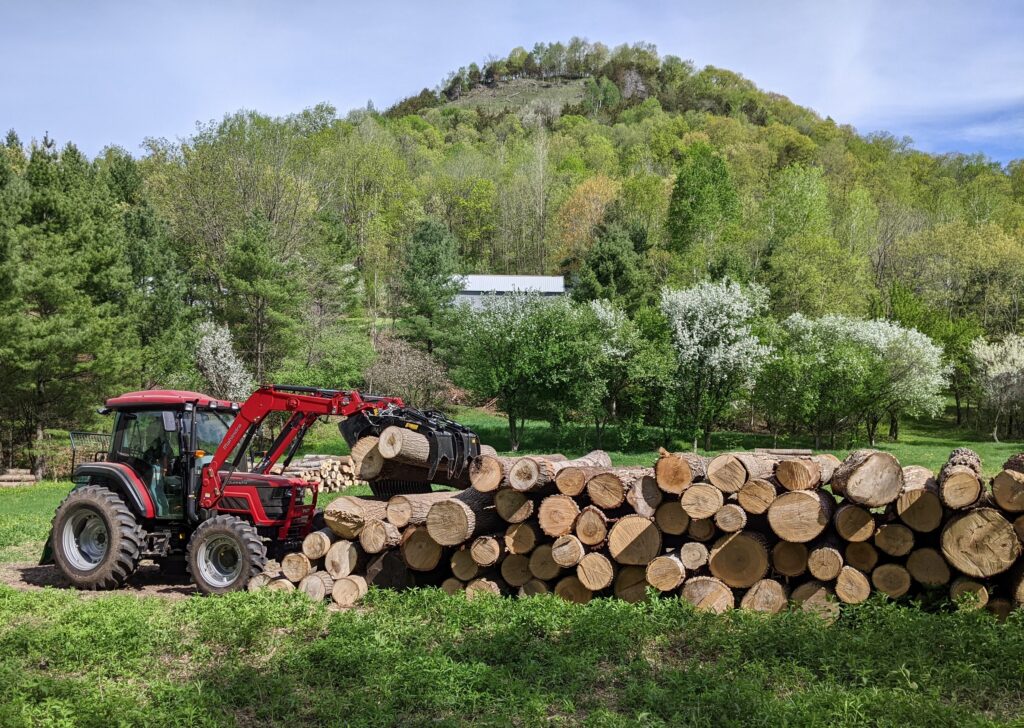
Overcoming Woodland Challenges: The Domine Family
Owning and stewarding your woods doesn't come without its challenges! The Domine's share their story about overcoming challenges with the help of patience and family team work.
By Denise Thornton
Wes Domine grew up on a farm in North Dakota, raising corn, oats, wheat and beef. “I hunted ducks and pheasants, and we ate a lot of wild game,” he remembers. “When Karen and I got married, we found a 70-acre piece of land for sale near Fountain City, where Karen is from. Her family are the fourth-generation owners of the local plumbing and heating shop, so we got a lot of help from them while building our home.” Karen manages their huge garden, putting up the harvest from 80 tomatoes plants, for example, while Wes puts his time into their tree farm, which is a Wisconsin Certified Tree Farm.
Gradually, they have added neighboring land, bringing their property to 150 acres. “There was a corner missing from our first piece that a farmer had bought, thinking it could be cleared and farmed,” says Wes, “but it wasn’t possible, so he sold us that five missing acres. Later another neighbor offered some woods to us. We took the plunge and bought it, too.”

Their land has an extensive trail system. Wes laid out the first route through their former pasture. “That one was easy because its bottomland,” he says. “When we got more acres, I hired someone with a bulldozer to put trails along the steep bluffs. Our kids love those. And when we had logging done, the loggers put in a trail that had bulldozed so I can mow. I really enjoy getting out there, taking care of the deadfalls. Sharpening chains has become a hobby of mine.”
Wes enrolled early on in Managed Forest Law (MFL), a landowner incentive program run by the Wisconsin DNR that encourages sustainable forestry on private woodlands. In exchange for following sound forest management, the landowner pays reduced property taxes. “It seemed like the right thing to do,” he says. “We started planting the dairy pasture as soon as we had an MFL plan for the property.” After the 25-year program expired, they re-enrolled. “Everything except the area around the house is enrolled in MFL. It’s been helpful. You have a plan, and you follow it. There are some mandatory practices, and that has been interesting. A harvest was called for, and it was the right thing to do, but it took years to find someone to do it. The foresters looked at it in the right light. I documented all the loggers I asked to come and look at it, and they gave me time.”
“We planted the pasture with oak and walnut intermixed with conifers, mainly pine,” says Wes. “We put about 22,000 seedlings in the ground between 1993 and 1995. We had machinery and a lot of help from the DNR Forester, Josh Rasmussen, and also a neighbor I paid to drive the tractor with the planter behind it. Our land is very steep. My neighbor was quite a daredevil, and I was in the planter getting bounced around. What we couldn’t plant by machine, I planted by hand, putting the seedlings in as best as I could.”
Recently retired, Wes worked as a mechanical engineer in Winona, Minnesota, for a company that designs and builds winches. “From big ones you might see on a ship or in a mine, to little winches that you might crank by hand, and everything in between,” he says. Karen is the accountant for the Fountain City School District, working in the high school she once attended. All four of their sons are also engineers — two are mechanical engineers, one electrical, and one a chemical engineer.
“Working full time, you don’t get a lot of extra hours, but I was planting pretty hard in those springs. When you are new at this, you think every spot has to have a tree. Thinking back, I was probably planting more aggressively than I had to, but I enjoyed it all.”
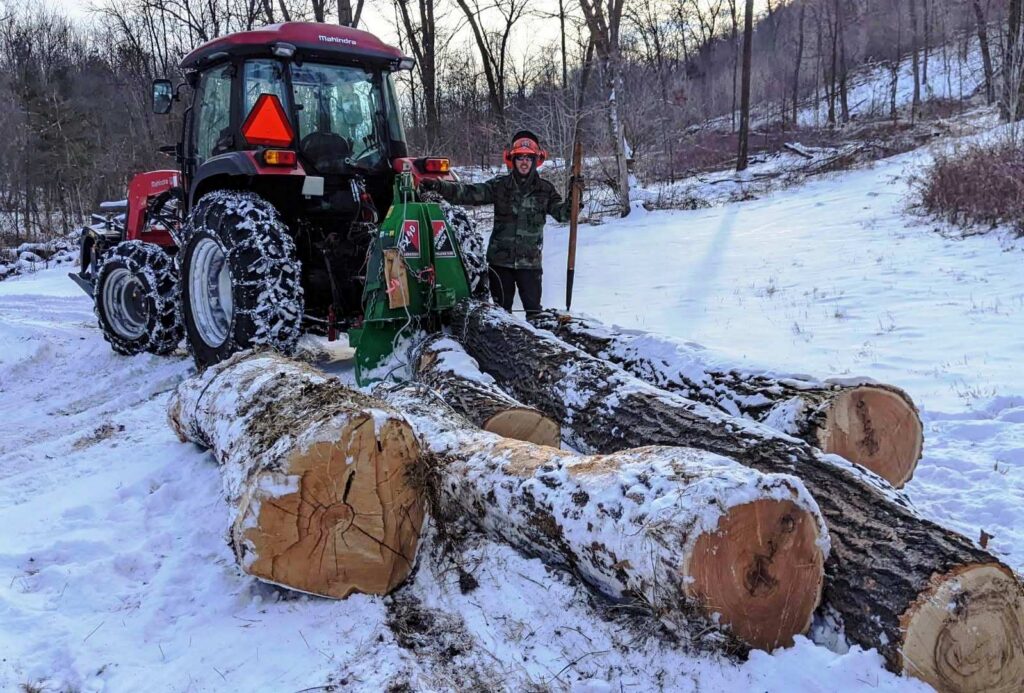
“At that time we would plant three conifer rows and then a row of hardwoods,” Wes says. “When we needed to thin the pines, no one would come in there with a machine, so we started thinning them ourselves in 2012. My wife and our four boys and I cut them and pulled them out with four-wheelers.”
The first pine logs Wes cut and sold were in 2015. “Honestly, it didn’t pay,” he says. “But you feel good because they really had to be thinned. They were covering the hardwoods that you expect to be there for the next generation. I’m glad we thinned then. We had a pulp mill still buying within 35 miles of us at that time, but it was a battle to get a trucker when all you have is one semi load of pulp logs.” This was complicated by the need to thin them in winter. There are local road bans in spring when you can’t haul. Meanwhile the mills want them by a certain time. “I love working in the woods,” says Wes. “I just wish there was something better in the works for selling those trees.”
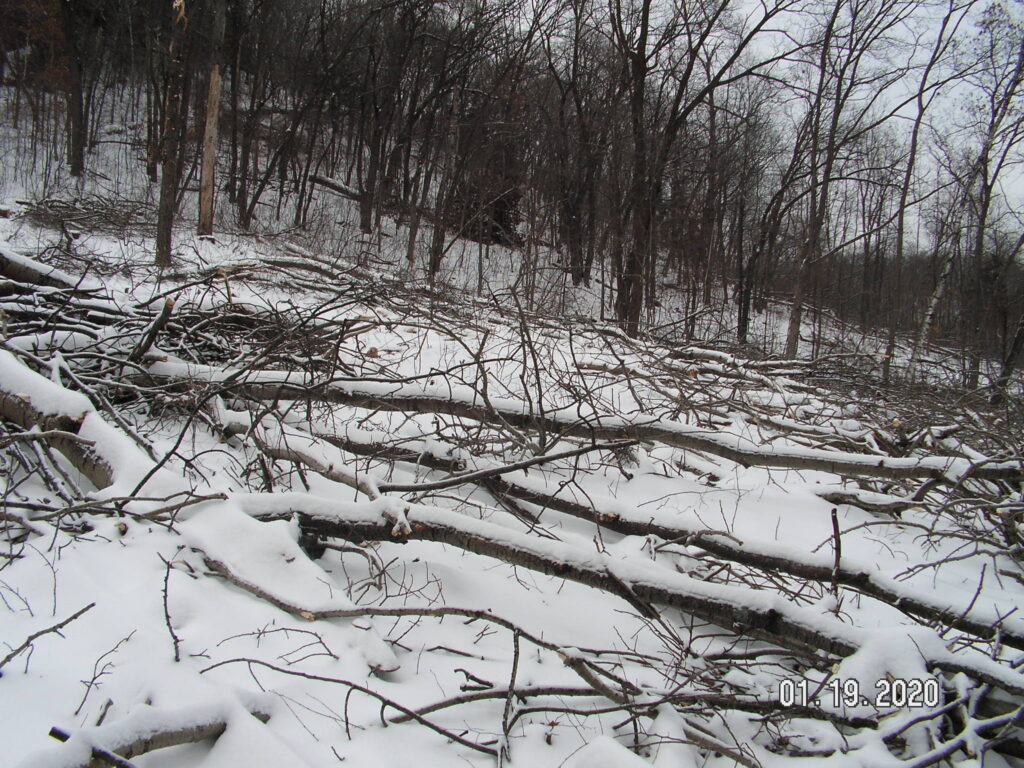
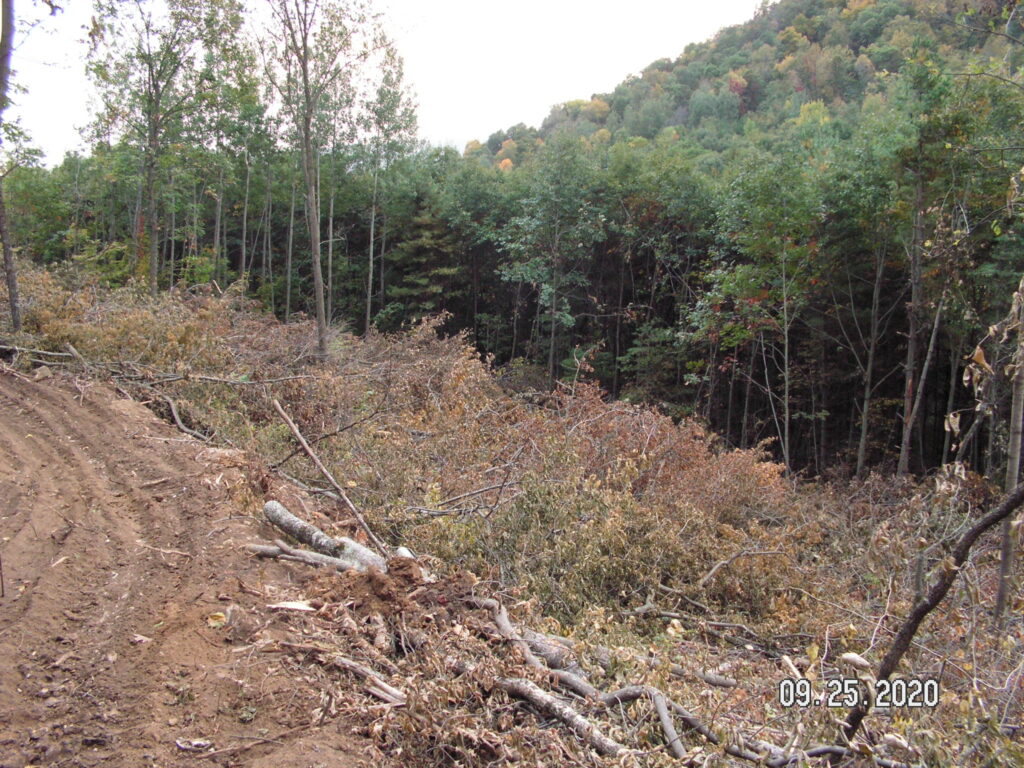
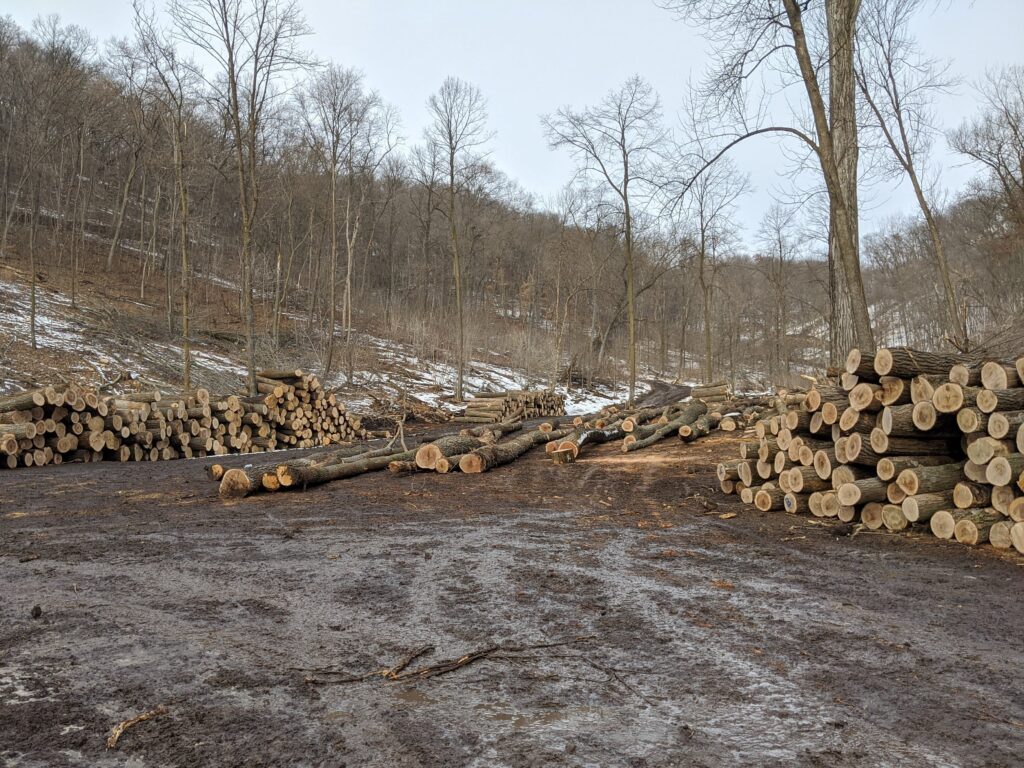
Wes has continued to face challenges harvesting and finding a market for his wood. “Hardwoods have gotten to be a concern too,” he adds. “Our woods had been high-graded over the decades prior to our owning it when previous owners would sell timber, and a logger would come in and take what he could make money on — which means the good oak. Over time, the regrowth is things like basswood and boxelder, There wasn’t enough oak left to get a logger.”
At one point, Wes arranged a sale, but the market collapsed before it was logged, and the logger went out of business. Another time, Wes tried working with a local farmer to log his land, but the farmer found a better deal logging elsewhere and never finished Wes’s woods. Finally, Wes found someone to agree to come and log when the guy had a gap in his regular schedule. It did take a while, but now that it’s done, he spends a lot of time out in the woods trying to regenerate the oak.
Wes takes four or five chainsaws and goes through the logged areas to make sure young oaks he finds don’t get outcompeted by other, faster-growing trees. “I find oaks that are surviving, and I clean out around them. I always hope I don’t clear out so much that the deer will find and eat them. That’s where my conservation effort goes these days.”
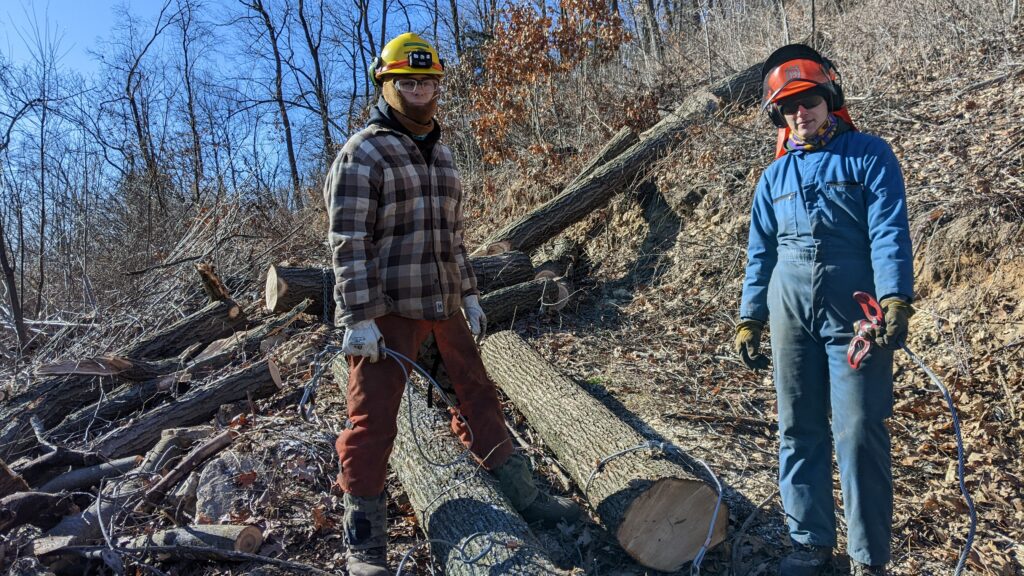
“I wish we could run a fire through there,” he says. “So many forest plants come back to life if you get a fire through the woods, but most of the logged areas are where I cannot safely run a fire.”
Wes does burn a steep bluff that he is keeping in prairie. “It’s quite a view from up there! I can see the Mississippi River if I climb the bluff, but the closer you get to the river, the steeper it is.”
Years ago, Wes started cutting the red cedars on the bluff to preserve the prairie habitat. He burns his “goat prairie” every year when possible to keep it from being overtaken by the cedar, aspen, and sumac. It’s a five acre south-facing, very steep slope. “There are things that grow up there that don’t grow anywhere else around here: lead plant, hoary puccoon, big bluestem and little bluestem, cone flowers and native sunflowers,” he says.
Wes shares his love of nature with his community. He served on the Conservation Congress of Wisconsin for 18 years. Now, Wes serves as president of the Buffalo County Conservation Alliance. “We have five different rod-and gun-clubs in Buffalo County, and some of them have a lot of active conservation-minded members. My job is to keep them in touch with issues like what is going on with wake boats on our lakes and how we are losing our Knowles-Nelson funding.” For the first time in more than three decades the Knowles-Nelson Stewardship Program was not part of the state budget and will expire June 30.
Wes is also a member of Trout Unlimited, Pheasants Forever , and Backcountry Hunters and Anglers. “They are all doing good work across the nation trying to preserve public land and keep it managed for conservation,” he notes. “For me personally, that means growing wood products for the future and taking care of the natural environment.” After 34 years, raising a family and enhancing the ecological value of their property, the Domine’s are proud of what they’ve accomplished and are enthusiastic to keep going.