
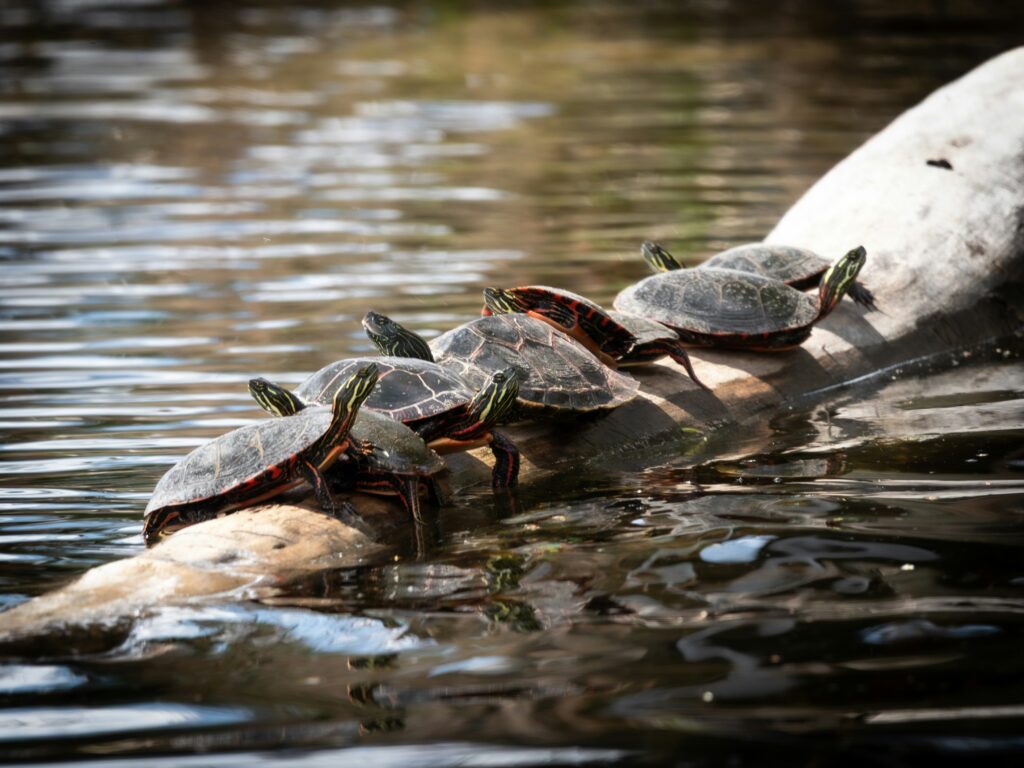
Cold-Blooded Survivors: The Secret Lives of Wisconsin’s Reptiles
Wisconsin is home to just 36 reptile species, and more than half are endangered, threatened, or of special concern. Meet the turtles, lizards, and snakes surviving on the edge of their range, and learn what UW-Whitewater biologist Joshua Kapfer says landowners can do to help.
By Denise Thornton
While more than 400 different reptile species can be found in the southern United States, Wisconsin is home to only 36, and according to The Natural Resources Foundation of Wisconsin, more than half of them are listed as endangered, threatened, or a species of special concern. Part of the reason we have far fewer reptiles is because of Wisconsin’s position in the Upper Midwest.
Reptiles are ectothermic (cold-blooded) and use the surrounding temperature to regulate their own. Wisconsin is on the very northern edge of where many of these species can live, and populations are often smaller on the fringe of an animal’s territory. Also, conserving our reptiles has not received the kind of attention devoted to fish, birds, and mammals.
Joshua Kapfer, a biology professor at the University of Wisconsin-Whitewater and co-editor of Amphibians and Reptiles of Wisconsin, points out that one reason we have so few reptile species is that most of Wisconsin’s boundaries are based on landforms and water bodies, which create natural ecological barriers. Within these boundaries, however, our reptiles experience a wide variety of habitats, from the north woods to the southern dry forest, prairie, savanna, lake shores, rivers, streams, and a variety of wetlands.
“They face a period of time each year when they have to survive very cold conditions,” says Kapfer. “To me, investigating our reptiles’ interactions with other organisms and their surroundings is more interesting than having huge numbers of species to process.”
TURTLES
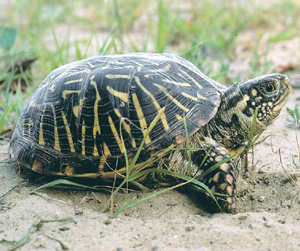
Wisconsin has 11 species of turtles. All except the ornate box turtle overwinter under water with no access to air. “Because they are cold-blooded, their metabolism slows so much during the colder months that they don’t require the same amount of oxygen under water as they would when they are active in other seasons,” says Kapfer. “One of the byproducts of metabolism when you don’t have access to oxygen can be a buildup of lactic acid, which can damage tissue, but turtles have a massive source of calcium in their shells that can help neutralize lactic acid buildup.”
Ornate box turtles are fully terrestrial. To survive winter, they can only live in areas with deep, sandy or loamy soil deposits, so they can burrow below the frost line. That restricts where they can live, and they are only found in a handful of locations in southwestern Wisconsin.
LIZARDS
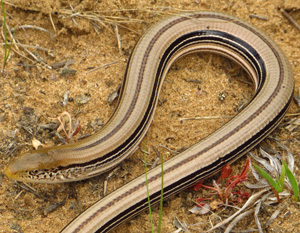
All four of Wisconsin’s lizard species need sandy soils to burrow and hibernate. They all lay eggs that hatch into tiny but fully formed lizards. They are the only reptiles that can drop their tail if it is grabbed. The loose, flapping tail is a distraction that provides a better chance of escape, and they can regrow it later. Lizards also have the shortest active season of any Wisconsin herp (an amphibian or reptile). They hibernate from September to late April or May.
The slender glass lizard is endangered in Wisconsin. It is easy to mistake for a snake because it has no legs. You can tell it from snakes because it has movable eyelids, which snakes do not, and it has an external ear opening, also absent in snakes.
SNAKES
Wisconsin has 21 types of snakes. Most snakes found in the state are constrictors that capture prey they overpower and swallow while alive. Those that constrict tighten their body around prey and squeeze it till it stops breathing. They all eat voles, snails, earthworms, frogs, young squirrels, leeches, and mice. Some of those mice are hosts to an essential part of the life cycle of ticks, making snakes an especially valuable part of the ecosystem.
Only two Wisconsin snakes are venomous: the eastern massasauga (which has been classified as endangered in Wisconsin since 1975) and the timber rattlesnake. Check out Venomous Snakes of Wisconsin and Common Look-alikes here.
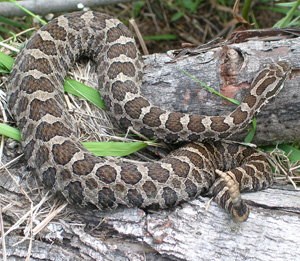
The eastern massasauga is a small rattlesnake, normally about two feet long, with the bigger head, rattle on the tail, and stocky body common to rattlers. Their primary prey is small mammals, according to Rori Paloski of the WDNR, in a presentation on Wetland Coffee Break. “They are often called the swamp rattler,” she notes. “In winter they are found in any kind of wetland. They want to find crayfish burrows or small mammal burrows to get down to the water table. In summer some will move to nearby, more open habitat. Pregnant females go into uplands in summer. Being cold-blooded, they are seeking warmth so their young can develop as quickly as possible. The young are usually born in August and have at least a month or two to eat and find an overwintering place.”
“Because of human persecution and habitat alteration, there are only eight sites left in Wisconsin where we have found massasauga,” says Paloski. These sites are in the southern and midwestern parts of the state.
Timber rattlers, which can be five feet long, are found in more upland, dry terrain. “We associate them with both dry, goat prairies on south- and west-facing bluffs and the wooded, north slopes of bluffs that are a little cooler,” says Kapfer. “We find them only in the Driftless Area. One reason is that those bluff locations provide reliable overwintering locations that big snakes can get into.”
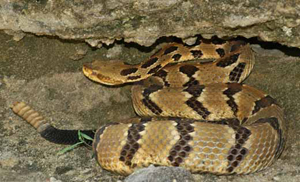
“They can’t dig,” he continues. “They need crevices and cracks that get them below the frost line. Numerous snakes will overwinter together in these locations, including blue racer, bullsnake, rat snake, hog-nosed snake, and milk snake.”
“The common garter snake, which is not a constrictor, is very adaptable,” says Kapfer. “It can be active when it is very cold. They don’t get as big, so they can find root channels or a rock pile with crevices just big enough to get below the frost line.” They can be found in every county in the state.
THREATS TO REPTILES
The biggest threat to all Wisconsin’s reptiles, says Kapfer, is alteration, destruction, and degradation of their natural habitat. “Nothing else comes close to it. Invasive species are a threat. Pollution is damaging as well, but habitat loss affects everything. When you start eliminating their overwintering locations, that’s it.”
“Because they are often disliked or feared, snakes are frequently killed when encountered, and that is a level of difficulty other reptiles don’t face,” says Kapfer. “At one point, populations of both kinds of rattlesnakes were quite large in Wisconsin. There are stories about early European residents encountering so many massasaugas during a portage near modern-day Portage that the travelers reported that the sound of their pervasive rattling was reminiscent of being in a watchmaker’s shop.”
Bounties paid for dead rattlers weren’t ended until 1975, but many snakes are still killed on sight. “Aside from the wolf, there is probably not a more maligned organism in North America than the rattlesnake,” Kapfer says. And yet, according to the Devil’s Lake State Park Visitor Guide, across all of Wisconsin, only about one rattlesnake bite is recorded every four years, and only two deaths from rattlesnake bites have been verified statewide since 1900. So while the risk is real in the right locations and habitats, bites are exceedingly rare. “The primary tendency of a rattlesnake is to sit in one spot and let you walk past it,” says Kapfer. “Having dealt with and handled many timber rattlesnakes, the only time they have ever acted aggressively towards me is when I have been trying to manipulate them for the research I was doing.”
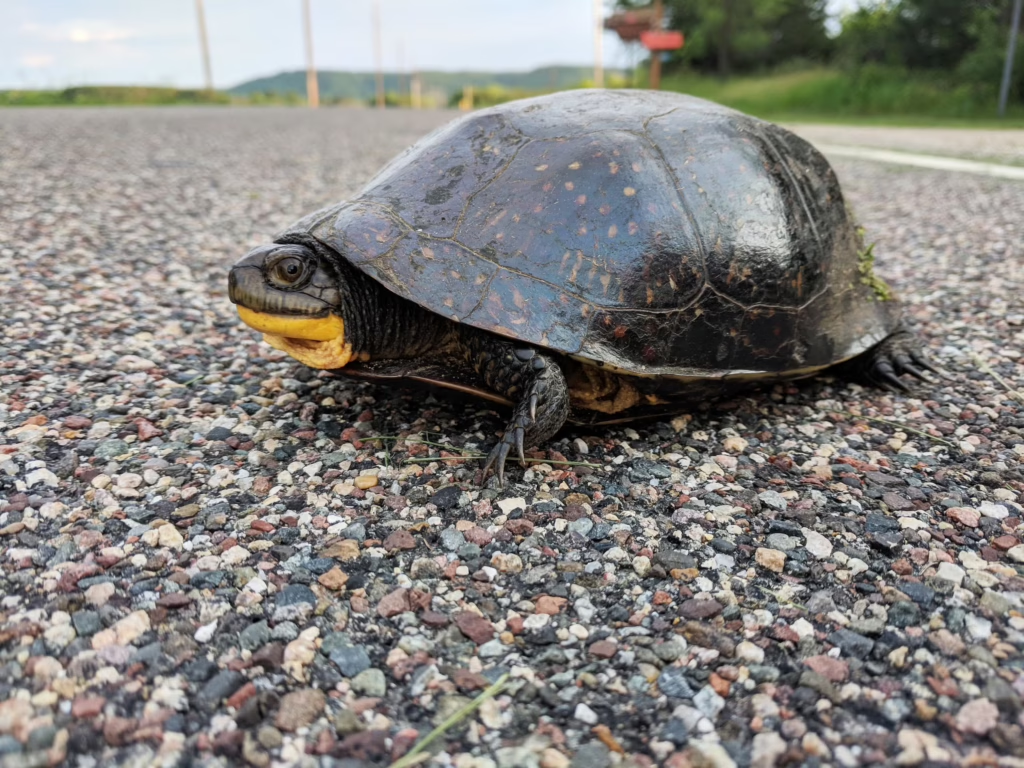
Turtles also face several specific threats. The population of raccoons has grown because they have found ways to live with humans, and they are having a devastating impact on turtle nesting success, Kapfer notes.
“Turtles rely on two different habitats to complete their life cycle, having to leave the water and often cross a road to get to their nesting location. A Blanding’s turtle can take 20 years to reach sexual maturity, and while they stay in wetland habitats their whole lives, they still move between numerous wetlands. They not only need multiple wetlands; they need intact connections between them all,” says Kapfer. “So when humans start subdividing the landscape, it really takes a toll on them, and it can take decades to replace a lost reproducing female.”
Late May through June is the peak time when turtles may be found on roads, so if you are driving near wetlands, rivers, or low areas during that time, it makes sense to slow down and pay attention.
WHAT YOU CAN DO
Kapfer encourages land managers to promote a structurally variable landscape. “As cold-blooded critters, reptiles need to move in and out of different areas to try to modulate a consistent internal temperature.”
Having places with structures where herps can hide from predators is important. “If you have a brush pile, leave it. It may be critical habitat. Downed logs and other things that provide shade are important to them,” he adds. “When I am out looking for reptiles, I am looking for the kind of cover they prefer.”
As well as contributing valuable predator/prey balance in an ecosystem, Kapfer sees amphibians and reptiles offering an even greater service, more so than any other group of wildlife. “You can’t catch a coyote or an eagle with your hands, but I take students out, and they can catch and hold these animals. This touching is so hugely impactful to develop a connection between people and wildlife.”
“I have hundreds of photos of students, from grade school to college, holding snakes, and they all have massive smiles on their faces,” he says. “Herps are great ambassadors, strengthening the connections between humans and wild places.”