5 Books Every Landowner Should Read – Edition Three!
In our third edition of "5 Books Every Landowner Should Read," we explore everything from agriculture to amphibians! Check it out.
by Denise Thornton
When you want to gain a fuller perspective of your land, there is nothing like diving intoa good book. In a world of easy access to quick facts, books provide a path to looking past the superficial. Here are some choices that explore in detail Wisconsin’s amphibians and reptiles, and its agricultural history, and make deep dives into the realms of seeds, mosses and how birds see the world.
Amphibians and Reptiles of Wisconsin, edited by Joshua M. Kapfer and Donald J. Brown, 2022.
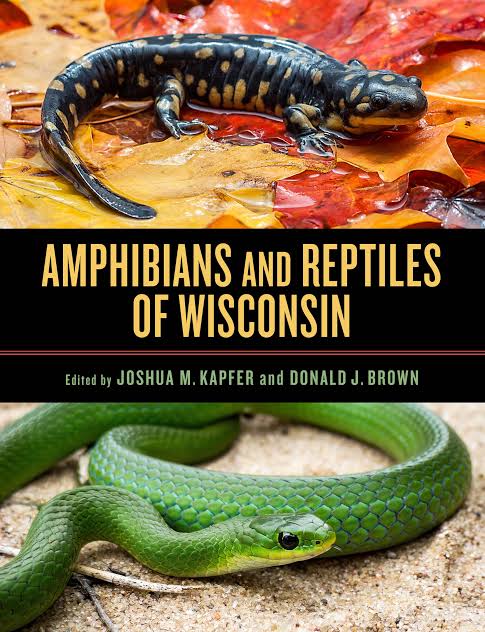
The last book that summarized information on Wisconsin’s amphibians and reptiles, came out in 1981. Fortunately, Joshua Kapfer, UW-Whitewater biologist, along with Donald Brown, have compiled the current and very comprehensive Amphibians and Reptiles of Wisconsin .
“We asked over 50 different experts to contribute to this book,” says Kapfer. “We want to be useful for professionals, but we also want to make sure the book is interesting to everyone. There is a chapter on threats to these animals, and another on habitat management. We felt strongly that we should include a lot of information on conservation and management. Understanding the conservation needs of our state’s amphibians and reptiles is crucial.”
“I also wrote a chapter on prominent figures in Wisconsin herpetology (the study of reptiles and amphibians),” he added. “That was one of my favorite to write.”
“Richard Vogt’s earlier book is much beloved by herpetologists in the state because it includes all the species. He used a lot of his own data and anecdotal stories,” says Kapfer. “We tried to emulate that with natural history text boxes. Readers will find these boxes fascinating background.”
At the heart of the book are the chapters on each species with in-depth descriptions on how to identify eggs, juveniles, and adults. These descriptions are enhanced with detailed, color photos. The reader will also find maps indicating their distribution in both the state and the Northern Hemisphere. Each species section begins with an At-A-Glance overview. And ends with a review of management strategies.
This is a big book, running to more than 1,000 pages, but it can be found in most libraries. Kapfer says that a condensed, field-guide size volume is being planned.
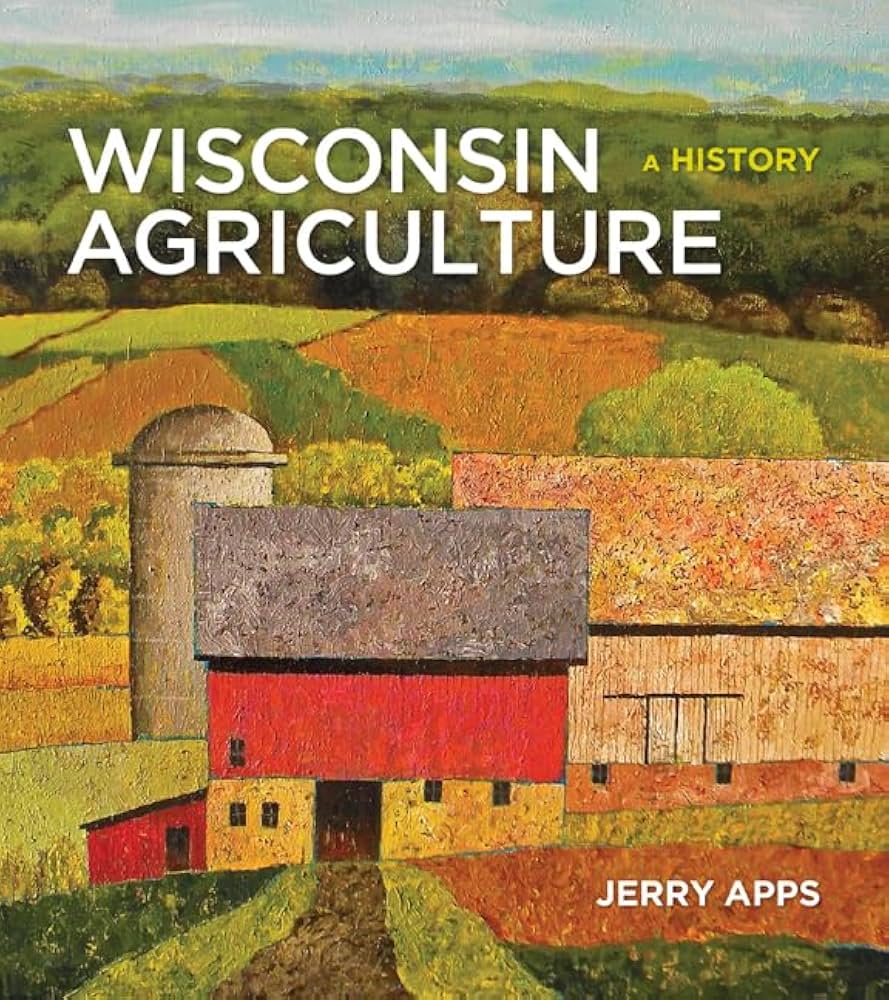
Wisconsin Agriculture: A History, by Jerry Apps, 2015.
Wisconsin lost one of its most devoted voices about our natural and cultural history this past year with the death of Jerry Apps. An emeritus professor at the UW-Madison College of Agricultural and Life Sciences, he wrote more than 35 books on Wisconsin’s history, from barns to breweries. “Name any topic pertaining to Wisconsin life and culture, and Jerry Apps has probably written about it,” says Ericka Janik in an article in OnWisconsin .
A good introduction to Apps’ body of work is Wisconsin Agriculture: A History, published is 2015 by the Wisconsin Historical Society Press. Though known best for his work as a rural folklorist, this book is a comprehensive and concise history of farming in our state.
Wisconsin has a varied agricultural history. Apps begins with what we know of the way Wisconsin’s First People farmed here and the forms of European agriculture that followed, beginning with the punishing task of transforming the state’s deep-rooted prairie to wheat fields. Breaking the sod took as many as 10 oxen to pull the plows. Harvesting meant cutting the wheat with scythes and tying it into bundles by hand. Machinery soon enhanced farmers’ productivity, which peaked in 1873, but nitrogen-depleted soil, and railroads creating competition from states to the west led to the stream of fascinating and varied forms of Wisconsin farming that Apps details. He explores the development of dairy farming, cranberry bogs, fruits from fields and orchards, truck farming, organic farming, specialty crops, honey, maple syrup, and Christmas trees, among others. The book has great photos illustrating every aspect.
Gathering Moss: A Natural and Cultural History of Mosses, by Robin Wall Kimmerer, 2003.
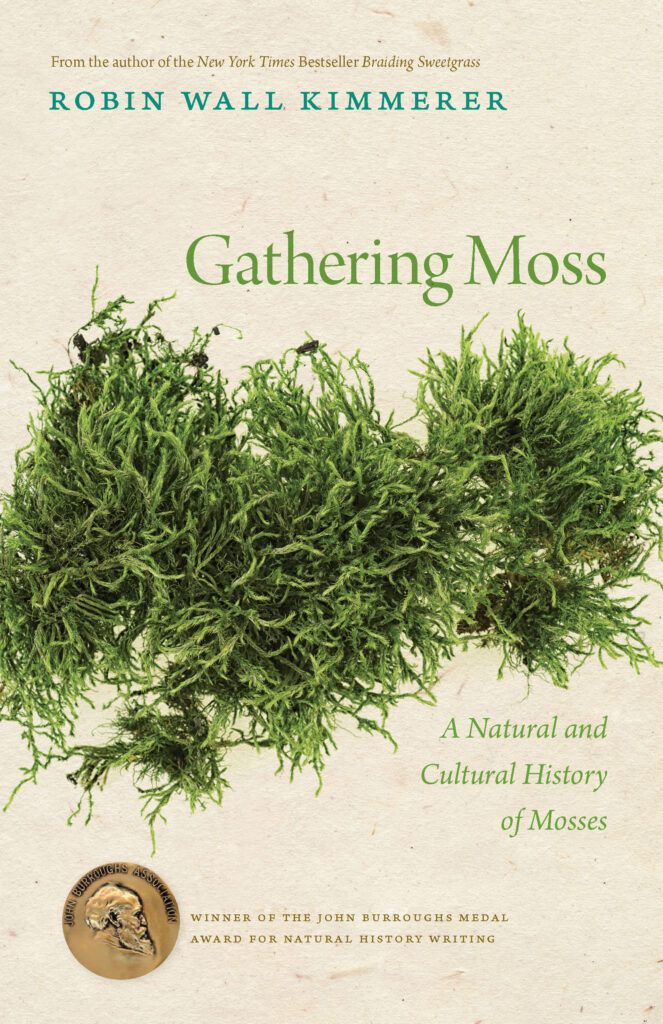
We have all admired the patches of vivid, vibrant moss we find thriving in the shady places of our land, but you will never look at them the same way again after reading Gathering Moss: A Natural and Cultural History of Mosses .
Many of us are familiar with Kimmerer’s best seller, Braiding Sweet Grass. Gathering Moss was written 10 years earlier — closer to the time when she earned her masters degree in botany and her Ph.D. in plant ecology at UW-Madison. It was during her study of forest ecology there that she began to focus on mosses.
Her first book, Gathering Moss, received the John Burroughs Medal, awarded each April to an author distinguished in natural history. This is a slim volume that can be read quickly, but I suggest you take your time. Kimmerer is not just an excellent scientist passing on the fascinating details of mosses, she is a Potawatomi and the former director of the Center for Native Peoples and the Environment at the State University of New York College of Environmental Science and Forestry. This dual vision brings a richness to her writing that is best absorbed slowly and deliberately. You will learn the precisely-illustrated life cycle of moss, and you will also read her observations including, “Learning to see mosses is more like listening than looking. A cursory glance will not do it. Straining to hear a faraway voice or catch a nuance in the quiet conversation requires attentiveness, a filtering of all the noise, to catch the music. Mosses are not elevator music; they are the intertwined threads of a Beethoven quartet.”
What It’s Like To Be a Bird: From flying to nesting, eating to singing — What birds are doing, and why by David Sibley, 2020, Alfred A Knopf
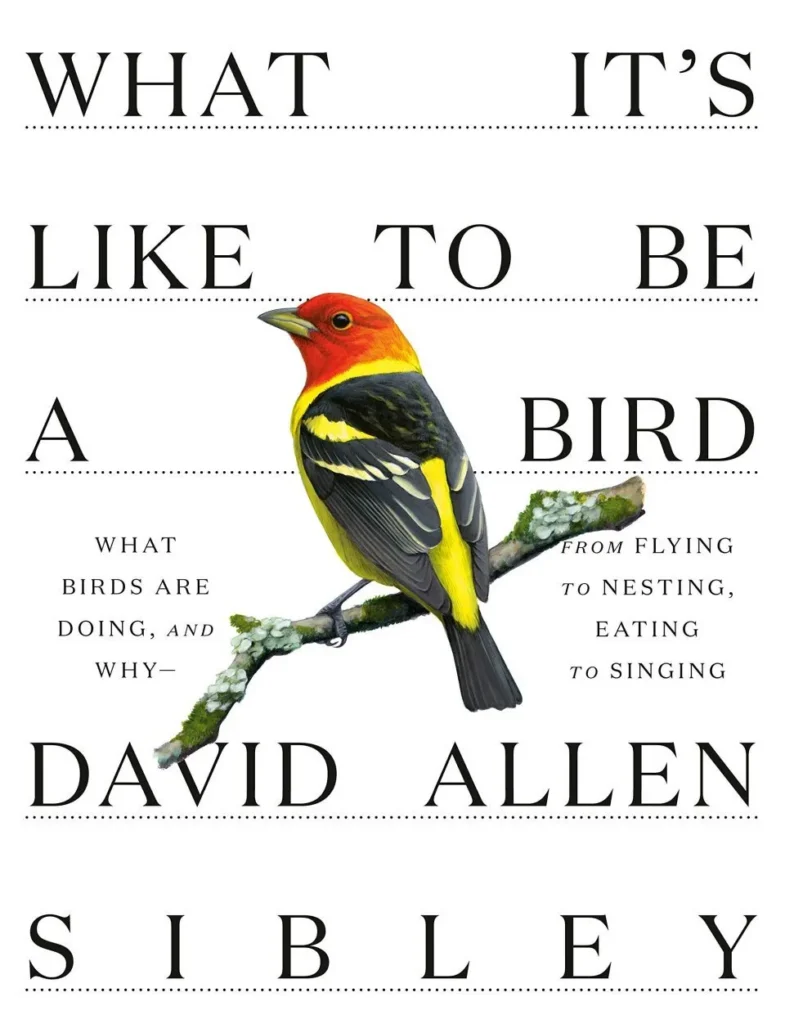
David Sibley, an ornithologist is also author and illustrator of The Sibley Guide to Birds, as well as a number of other guides to trees. But What It’s Like to Be a Bird is much more than a standard guide. It is an exploration into the current understanding of birdbehavior, anatomy, and physiology. Sibley says, “I’ve been surprised many times to learn which things we share with the birds, and just as surprised at other times to learn how different we are.”
The book is organized into 96 two-page spreads. Gorgeous, life-sized paintings of the birds by Sibley appear on the left page. On the right page are short essays, smaller paintings, and diagrams. You will learn that many birds can see into the ultraviolet wavelengths including a whole range of colors beyond purple. Male and female chickadees may look alike to us, but the males have a much stronger ultraviolet reflection on their cheeks. We can only imagine how striking that white patch appears to lady chickadees. An essay on woodpeckers reveals that like most nestling birds, at the end of a young bird’s intestines just before defecation, a gelatinous mucous encases each dropping in a neat fecal sac, creating a packet the adult can pick up and carry away.
The illustrated introduction groups the essays into topics with associated page numbers, so you can easily find all the essays related to particular topics, such as bird vision. The sources provided at the end of the book, allow readers to pursue more deeply any bird behaviors or characteristics.
An Orchard Invisible: A Natural History of Seeds by Jonathan Silvertown, 2009, University of Chicago Press
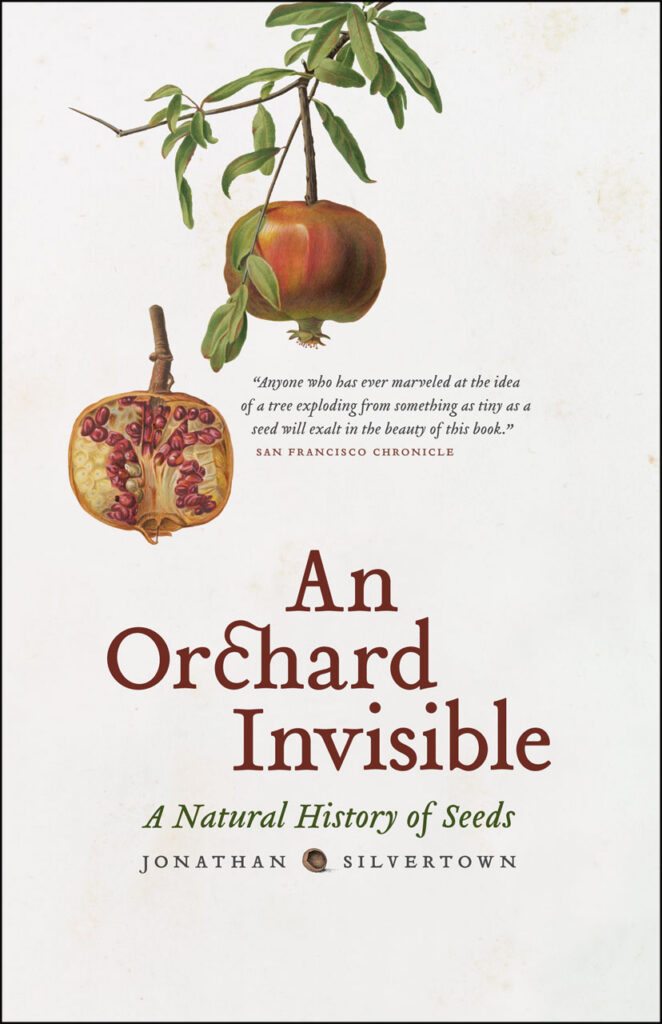
For those who enjoy not only the revelations of modern science but also how we came to possess this knowledge, An Orchard Invisible would make a good read for those long winter nights. Silvertown also explores diverse side effects of seed evolution on humans, such as the development of mast years when oaks bear an exceptional load of acorns. “Two factors increase tick densities two years after a mast year,” he notes. “Initially the large acorn crop concentrates deer and mice together, increasing the likelihood of transmission of ticks between them. Subsequently, mouse density increases, providing more hosts for juvenile ticks.”
Our interaction with sunflower seeds and corn are explored in depth. Barley is another seed with an outsized influence on human health and happiness. “The natural history of the coffee bean and the history of the beverage are ineluctably united by a small molecule that the plant uses to defend itself. … Caffeine has driven humans to disperse it to every corner of the globe where climate will let it grow…”
Seeds are much more than a simple means to an end. They each have their own features and histories that create a life of their own. Sivertown’s eloquent exploration ranges from their diversity, properties, roles in nature, and more broadly, into the development of civilization.
Picking up a good book takes some extra effort. But in the bargain, you’ll find real satisfaction at not stopping at the easy answer. And just maybe, your deeper search will provide a fuller and more gratifying understanding of why you chose to care about land management in the first place.
Happy reading!